
Finfluence: The interplay between trading platforms, investment communities, and financial influencers
Finfluence studies how young adults navigate the plethora of financial information circulating in their social circles and coming from influencers, platforms, and communities. Based on this, the project sheds light on the changing forms of authority in society.
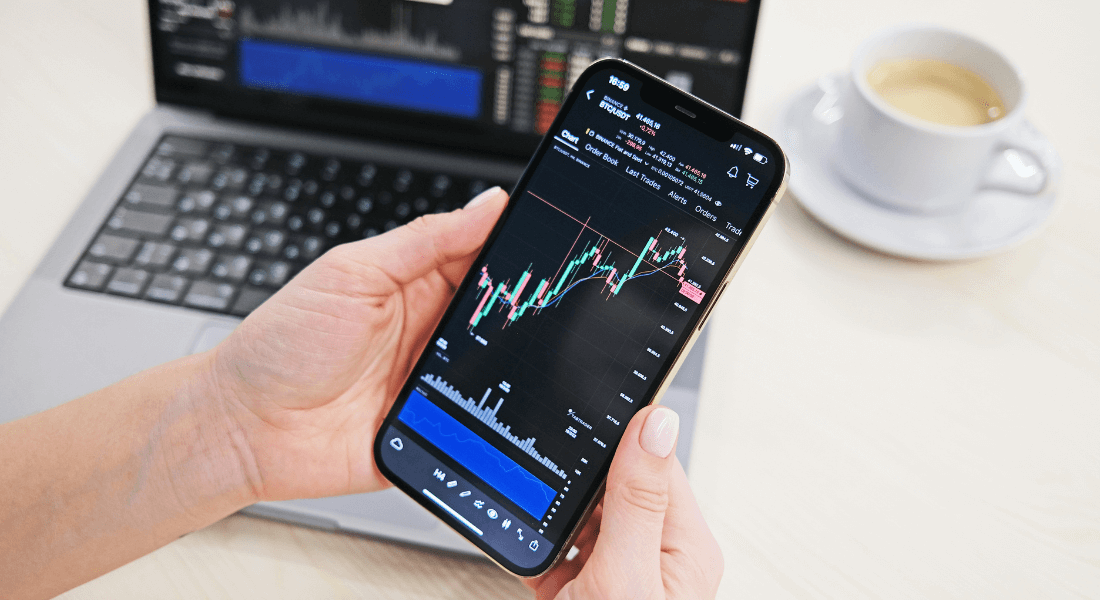
In recent years, trading platforms have given people unprecedented access to trade in the financial markets – stocks, cryptocurrencies and even more speculative products – directly from their mobile phones. At the same time, popular financial influencers and online communities sell the dream of easy ways to riches and financial independence by trading in the financial markets. Finfluence seeks to understand how much the new financial actors appeal to the young investors compared to more traditional opinion leaders such as family and friends, the media, and experts.
In this way, the financial domain is a particularly exciting field for understanding the changing roles of new and old authorities in society more generally.
To explore the interplay between platforms, influencers, communities and users, the project asks the following research questions:
- How do individuals navigate the information landscape around investing, and to what extent do they engage critically with the values of platforms, communities and influencers?
- How do platforms, communities and influencers mobilize different conceptions of the value and purpose of investing in their discourse on social media and on their services?
- Building on RQ1 and RQ2, to what extent do the new financial actors cultivate problematic investing practices among the young and how can we as a society communicate about finance to help people to take control over their economic future in a responsible way?
By answering these four questions, the project provides empirical insights to the understudied area of finance communication; it also advances a theoretical agenda that evaluates the moral value of economic actions. Lastly, Finfluence integrates practioner perspectives as central to both research processes and development of outcomes.
The project integrates theories from communication research, sociology and economics to understand the interplay between influencers, communities and individuals.
Communication research have known for years that people’s everyday decision-making, not least in financial matters, is shaped not only by the media they use but also the influential peers they listen to in their social network (Katz & Lazarsfeld, 1955/2005; Merton, 1949; Weimann, 1991). While interpersonal relations remain important to understand how people communicate about their financial situation, new forms of communities have emerged on social media that also affect how people talk and think about finance (Baym, 2015; for an overview, see Jakab, 2022; Massanari, 2015). In particular, studies have shown how online communities form idiocultural norms and values around what counts as sound financial strategies and morally appropriate investments (Gregersen & Ørmen, 2023; Harrington, 2010; Just & Petersen, 2023; Spelta et al., 2018). However, there is a lack of research that brings together the work on communication in social networks with the studies of user interactions in social media groups and web fora. This project offers a combined perspective covering both local and global communities.
Secondly, the project draws on the literature on social media creators (Arriagada & Bishop, 2021; Cunningham & Craig, 2021; Duffy, 2017; Hund, 2023) to understand the commercial and creative strategies pursued by financial influencers. Although this literature has grown substantially over the past years, there are hardly any studies devoted to financial influencers (but see Ben-Shmuel et al., 2024; Hayes & Ben-Shmuel, 2024) outside of the field of finance and the appeal of finfluencers in the eyes of their audience is scarcely covered at all (albeit, see Haslop et al., 2024). Furthermore, in finance journals the focus tends to be on the immediate effect of discourse (and other actions) by influential social media accounts on patterns in financial markets (see e.g. Barber et al., 2022; Gemayel & Preda, 2018; Pan et al., 2012). The way financial influencers communicate through frames and narratives is also not sufficiently understood at present. In short, the influencers’ gradual cultivation of individual values rather than short-term effects on user behavior remains understudied.
Lastly, research has shown how the design and infrastructure of trading platforms also matter for how people perceive the value of investing. Gamified and gamblified mechanisms make risky trading seem fun and engaging (Braun & Gekker, 2022; Lai & Langley, 2024), whereas design choices and marketing material might obfuscate the complicated economic relationships ordinary investors enter into when trading on these platforms (Gregersen & Ørmen, 2024). In addition, the datafication, commodification, and curation of content shape the kinds of insight investors can gain about the nature and values of the platform (van Dijck et al., 2018). Thus, the field of platform studies offer suitable frameworks to understand how programmed affordances, marketing material, and design choices shape user behavior. However, little research has been conducted on how trading platforms as organizations see their responsibility toward their users; a key reason is undoubtedly that gaining access to platform companies is notoriously difficult (Bonini & Gandini, 2020).
In sum, the project contributes to existing scholarship by exploring empirical gaps in the literature and by bringing the various fields of research closer together through the comparative study of investors, platforms, communities, and influencers.
To answer these questions, the project is organized in four work packages (WP1-4) that address the questions from different analytical levels: individuals, communities, influencers, and platforms.
WP1 takes the perspective of individuals and thus contributes to RQ1. WP1 consists of a longitudinal ethnographic study with young investors in Denmark. The study seeks to understand how the information people encounter and the interactions they have shape their goals and values in investing. The study also interrogates how investors assess the financial advice of platforms, communities and influencers.
WP2 maps the moral economies of communities and influencers. The WP employs fieldwork methods as well as computational and qualitative discourse analysis to understand how communities negotiate the purpose of investing, and how influencers mobilize authenticity and authority in selling the values and goals to their followers (RQ2).
WP3 focuses on the platforms in RQ2. Trading platforms broker the relationship between investors and the financial markets and in this process translate between – and capitalize on – the different interests (Gregersen & Ørmen, 2024; Ørmen & Gregersen, 2022b; Otto, 2024; van Dijck et al., 2018). This easily creates conflicts of interest where the value for the company and the investor diverge (Rieder & Sire, 2014). The WP addresses this dilemma in two empirical steps: 1) a comparative study of platform interfaces (Braun & Gekker, 2022) to understand how the platforms guide investors to take particular actions and whether this fairly portrays potential risk and rewards (following Gregersen & Ørmen, 2024).
WP4 ties the previous working packages together by focusing on the normative dimension of the moral economy of communication framework (RQ3) and asks what the analyses in WP1-3 tell us about the fairness of financial arrangements. Do ordinary investors have the capacity to critically assess the discourse of platforms, communities and influencers? To which extent do the new actors reinforce the view of investing as a shortcut to riches rather than a slow journey to economic security? Do alternative values arise that reframe the value of investing, e.g. from an individualistic wealth-generating activity to a collective social endeavor? How should we build on these questions to help people better appreciate risks and rewards?
The following research is affilated with Finfluence:
- Ørmen, J., & Gregersen, A. L. (In press). Financial Influencers. In N. S. Borchers, M. L. Wellman, & L. Hudders (Eds.), The Routledge Handbook of Social Media Influencers. Routledge.
- Ørmen, J., & Gregersen, A. L. (2025). The expertise of financial influencers and strategies of calibration towards monetization. Nordic Journal of Media Studies, 7(1)
The advisory board for the project consists of:
- Lana Swartz, University of Virginia.
- Bernhard Rieder, University of Amsterdam
- Liz Moor, Goldsmiths, University of London
- Paul Langley, Durham University
- Adam Hayes, University of Lucerne
In addition, the projects operates a practitioner network of partners outside of academia. They are:
- Uffe Krag, Forbrugerrådet Tænk
- Henrik Thrane Brandt, Center for Ludomani
- Marc Grønlund, Finans Danmark
Researchers
| Name | Title | Phone | |
|---|---|---|---|
| Gregersen, Andreas Lindegaard | Associate Professor | +4535328092 | |
| Iuul, Casper Danholt | PhD Fellow | +4535328505 | |
| Ørmen, Jacob | Associate Professor | +4535328874 |
